
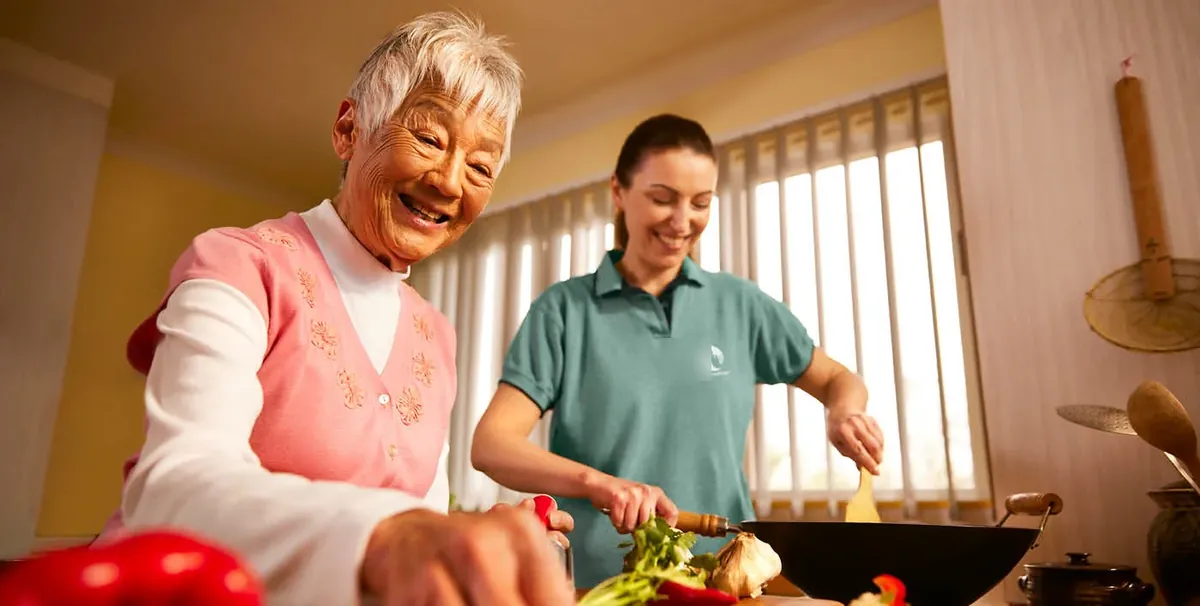
When eating starts to slip
Poor eating is one of the first things families notice, and one of the most serious. It often shows up like this:
- Expired food in the fridge
- Only crackers, cereal, or sweets in the cupboard
- Weight loss, looser clothes, or a belt on a new notch
- No interest in cooking after losing a spouse
- Trouble standing at the counter long enough to cook
- Forgetting the stove is on, which is also a safety issue
Not eating well leads to weakness, falls, confusion, and hospital visits. Good food is real care.
What meal preparation includes
- Planning meals around what they actually like
- Cooking breakfast, lunch, or dinner in their kitchen
- Making extra portions to refrigerate or freeze for later
- Cutting food up when that helps
- Following doctor guidance, like lower sodium or diabetic friendly meals
- Making sure drinks are within reach through the day
- Cleaning up the kitchen afterward
- Checking dates and clearing out spoiled food
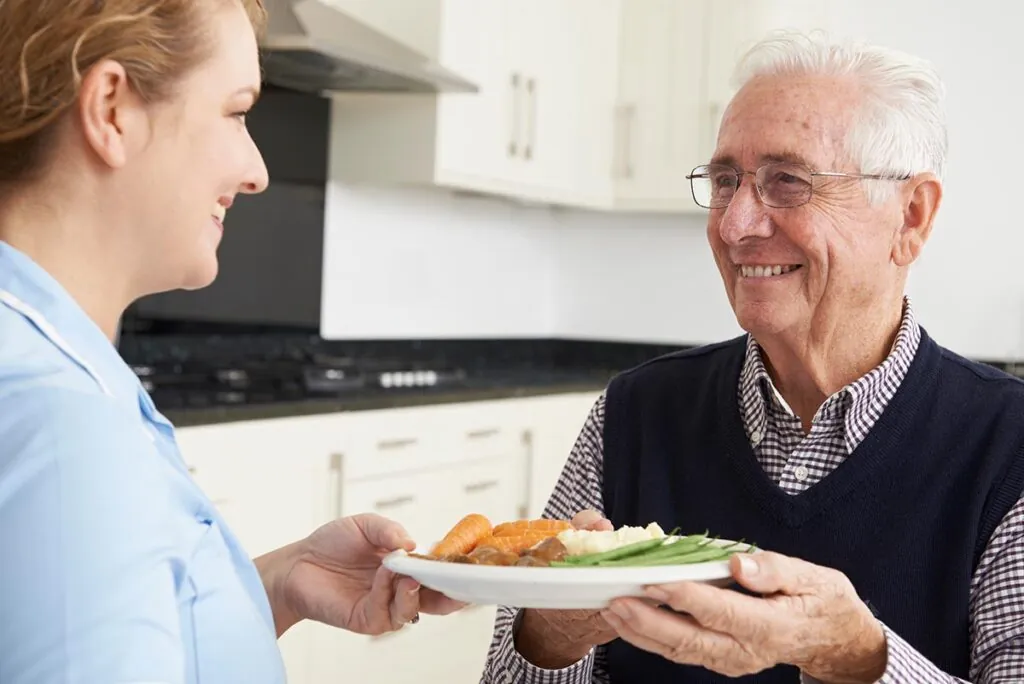
Cooking together, not just for them
Many clients love being in the kitchen again with someone beside them. Stirring a pot, peeling potatoes, telling us how their mother made it. That is good for the body and good for the spirit, so we invite it whenever they are up for it.
Staying hydrated
Older adults often do not feel thirsty until they are already dehydrated, which can cause dizziness and confusion. We keep water and favorite drinks within reach and encourage sips through the visit.
Groceries too
We can handle grocery shopping on the way to a visit, or take your loved one along so they pick their own. Meals often pair with companion care, because eating alone is part of why eating stops.