

Loneliness is a real health issue
Families often think of home care as physical help. But for many seniors, the hardest part of the day is the quiet. Spouses pass away. Friends move or stop driving. Days blur together in front of the TV.
Company gives a person something to look forward to. Someone notices whether they ate, whether they seem down, whether something has changed. That is worth a lot.
What companion care looks like
- Conversation over coffee
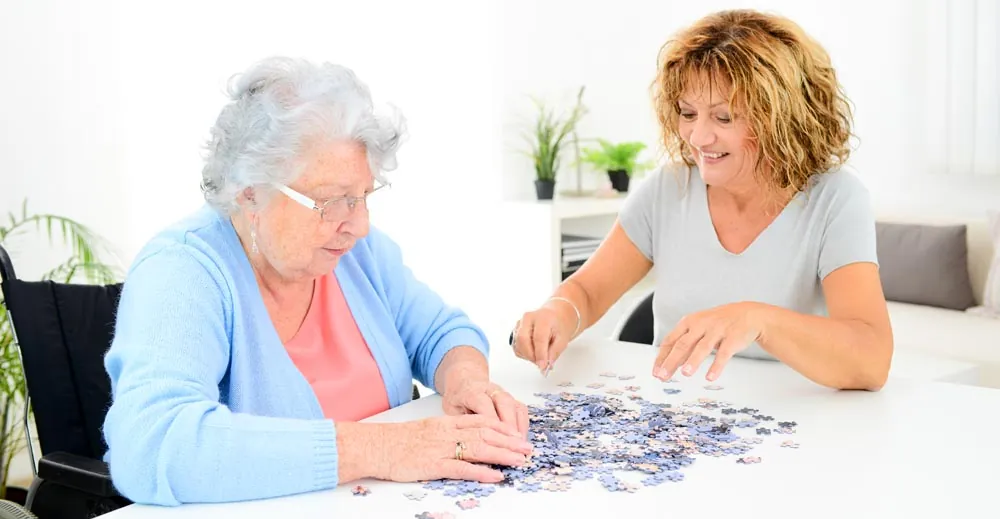
- Card games, puzzles, and board games
- Looking through photo albums and hearing the stories again
- Reading together, or reading aloud
- Watching a game or a favorite show
- Walks outside when the weather is nice
- Help writing cards and letters
- Video calls with grandchildren
- Trips out for lunch, church, the salon, or a visit with friends
- Watering plants, feeding pets, and small tasks together
Check-ins for families who live far away
If you live out of state, a scheduled check-in visit takes a huge weight off. We look in on your loved one, help with small things, and let you know how the visit went. It is a lot better than calling every night and hoping you get the truth.
What we notice
A caregiver who sees someone regularly picks up on changes a weekly phone call misses:
- Food going bad in the fridge, or nothing eaten
- Mail and bills piling up
- Repeating the same story in one visit
- New bruises
- Wearing the same clothes for days
- Missing appointments
- Pulling away from things they used to enjoy
We share what we see with the family so you can act early.
Often paired with
Many families start with companion care, then add meal preparation, transportation, or light housekeeping as needs grow. Not sure where to start? Read the signs a parent needs help at home.