
Why falls matter so much
A fall is often the moment independence ends. A broken hip leads to a hospital stay, then rehab, then weakness, and sometimes a move. Preventing the fall is far easier than recovering from it.
Bathroom
- Grab bars by the toilet and inside the shower, screwed into studs, not suction cups
- A shower chair and a handheld shower head
- Non slip mats inside and outside the tub
- A raised toilet seat if standing is hard
- A night light that stays on
- Water heater turned down so there is no scald risk
- Clear the floor of rugs that slide
Stairs and hallways
- Handrails on both sides, firmly attached
- Light switches at the top and bottom of the stairs
- Bright bulbs, and no dark stretches
- Nothing stored on the steps
- Loose carpet edges tacked down
- Contrast tape on the first and last step
Bedroom
- A lamp or switch within reach of the bed
- A clear path to the bathroom, lit at night
- A bed at a height where feet reach the floor
- A phone or emergency button within reach
- No cords across the floor
- Shoes and slippers with grip, never loose slip ons
Kitchen
- Everyday items moved to waist height, so no stepping stools
- A working fire extinguisher
- Auto shutoff kettle, or a stove knob cover if the stove gets left on
- A sturdy chair to sit on while prepping food
- Clean up spills right away
- Check expiration dates regularly
Living areas
- Remove throw rugs, or tape them down completely
- Cords run along walls, never across a path
- Chairs with arms to push up from
- Clear walking paths wide enough for a walker
- Bright lighting, especially in corners
- A phone in each main room
Outside
- Steps and railings in good repair
- Salt and shoveling handled by someone else in winter
- Good porch lighting
- A clear, even walkway to the car
- House numbers visible from the street for emergency crews
Beyond the house
- Smoke and carbon monoxide detectors tested, with fresh batteries
- An emergency contact list on the fridge
- A current medication list on the fridge for paramedics
- A plan for what happens if there is a fall and nobody is there
- A spare key with a trusted neighbor or a lockbox
What a caregiver adds
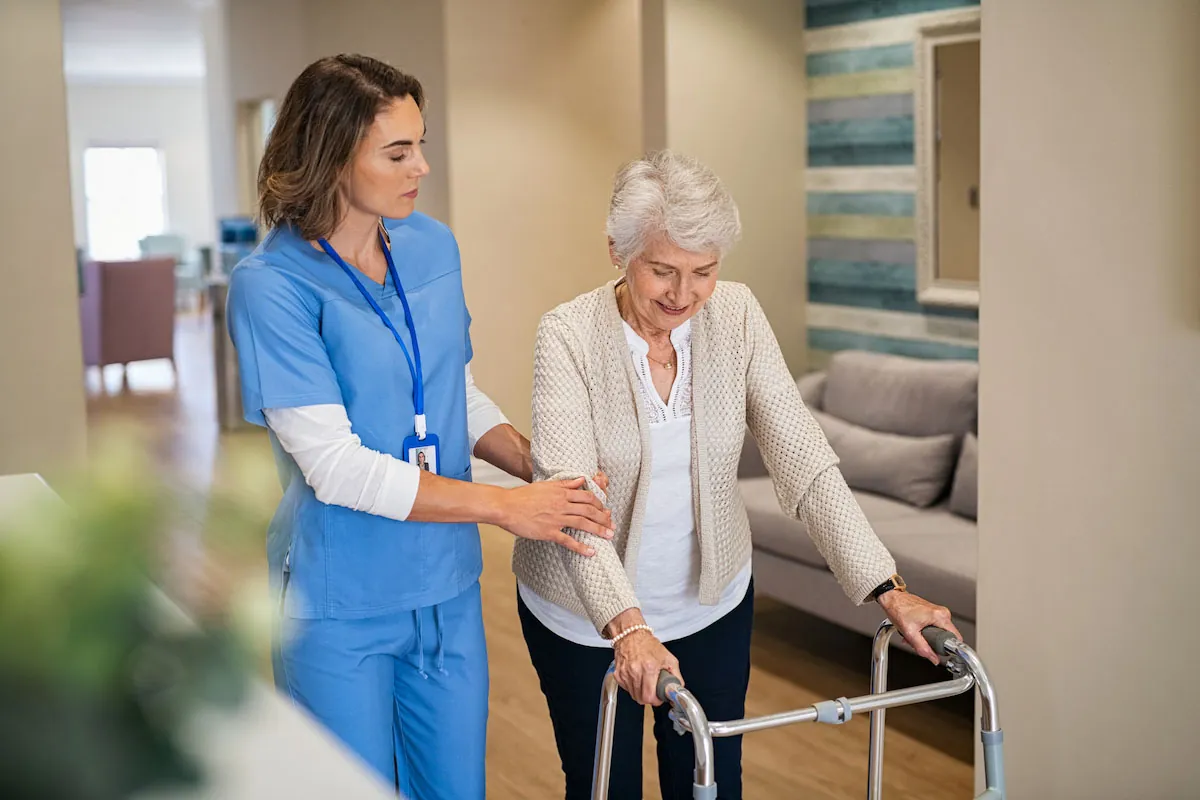
Equipment helps. A person helps more. A caregiver steadies someone on the stairs, handles the laundry from the basement, does the reaching, and notices when a hazard appears. See help with daily activities and personal care.